
Monday, January 31, 2011
The Crooked House, Sopot, Poland
Built by Szotyńscy & Zaleski and inspired by a children’s illustration made by Jan Marcin Szancer and Per Dahlberg, the Crooked House (Krzywy Domek) was built in 2004 as part of the Rezydent shopping centre in downtown Sopot. It was built to fit in with the other surrounding buildings but to appear melted or exhausted. The three-story house features several bars, restaurants and tourist shops and is the most photographed building in Poland.


Sunday, January 30, 2011
Kunsthaus, Graz, Austria
Built to celebrate European Capital of Culture recipient Graz in 2003, the Kunsthaus was designed by Peter Cook and Colin Fournier in an organic shape with a skin made of iridescent blue panels. With its large protruding nozzles, a concept known as “blob architecture”, the building has been nicknamed the “Friendly Alien” by its designers. The unusual museum hosts a variety of contemporary art from the last 40 years. At night, the museum is an amazing sight with its computerized lighting system that glows beneath the acrylic skin.


Saturday, January 29, 2011
Cathedral of Brasília, Brazil
This Roman-Catholic church in Brazil’s capital was designed by Oscar Niemeyer to symbolize two hands pointing to heaven. The cathedral is made up of 16 concrete columns, representing hyperboloid structures with asymmetric sections. In the square outside the cathedral, four bronze sculptures representing the Evangelists greet visitors. Three suspended angel sculptures decorate the building’s interior, weighing 100 kg, 200 kg and 300 kg.


Friday, January 28, 2011
The Atomium, Brussels, Belgium
Built for the 1958 Brussels World’s Fair, the Atomium is a 102 m-tall structure in the shape of an elementary iron crystal enlarged 165 billion times. The Atomium is made up of 9 steel spheres, out of which 3 are closed to the public since they lack virtual support; the remaining spheres are connected via escalators, the top one offering a breathtaking view of the city of Brussels. The construction symbolizes peace between nations, faith in progress and a positive view on the future of humanity.


Thursday, January 13, 2011
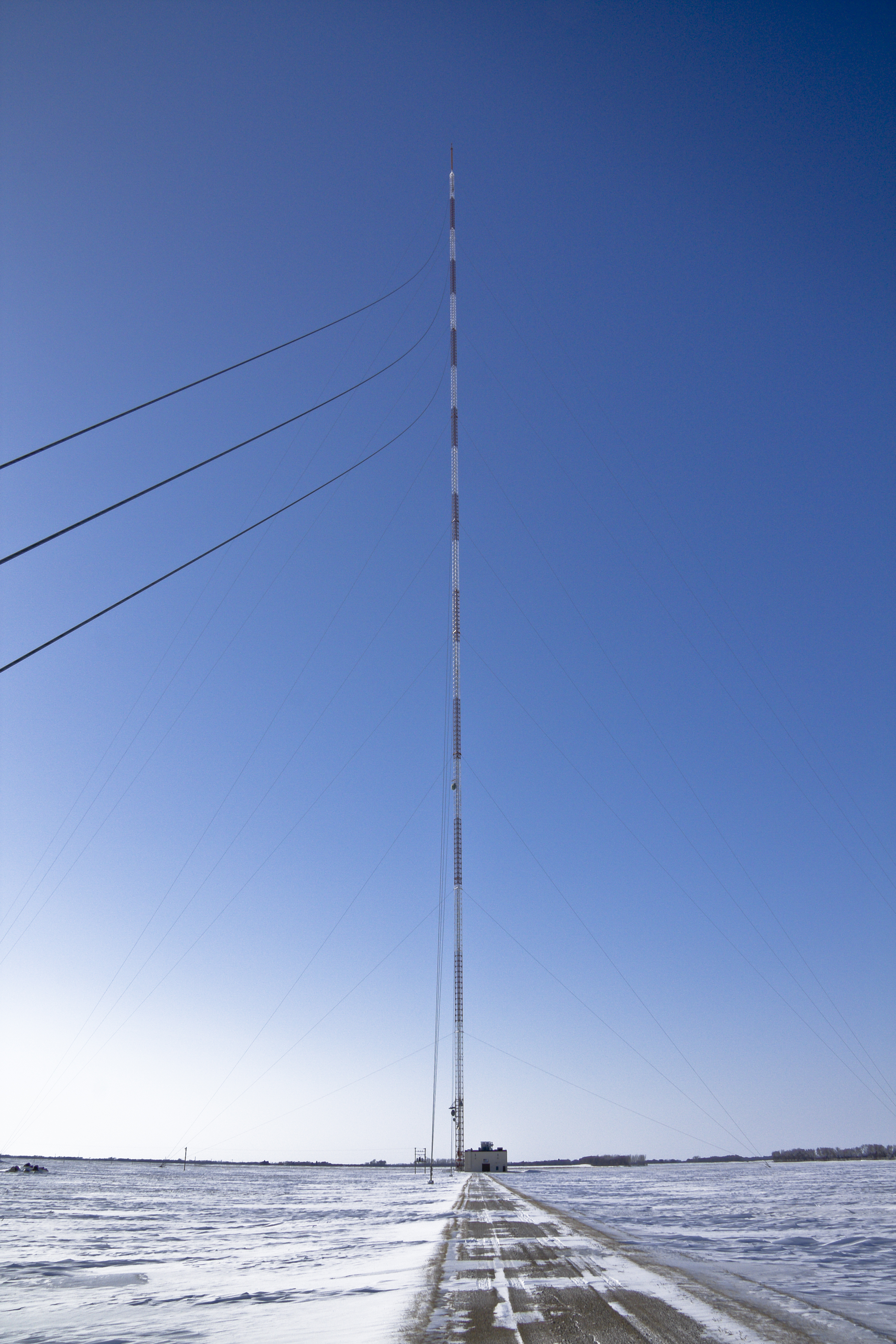
KVLY-TV mast
The KVLY-TV mast (formerly the KTHI-TV mast) is a 628.8 m (2,063 ft) tall television-transmitting mast in Blanchard, Traill County, North Dakota, United States, used by Fargo station KVLY-TV channel 11. Completed in 1963, it was the tallest structure ever built until succeeded by the Warsaw radio mast in 1970; that mast collapsed in 1991, making the KVLY-TV again the tallest structure in the world until the Burj Khalifa overtook it in 2010.

It remains the second or third tallest structure in the world. It is a guyed mast, not a self-supporting structure, and is therefore not included in lists of tallest buildings. The height of the transmitting antenna itself is 113 feet (34 m) and is included in the height of the tower as the lattice tower itself ends around 1,950 feet (590 m). The tower weighs 864,500 pounds (392.1 t) altogether and takes up 160 acres (0.65 km2) of land with its guy anchors.The 113' antenna alone weighs 9,000 pounds. In 1989, daredevils climbed the tower and BASE jumped from it.

It remains the second or third tallest structure in the world. It is a guyed mast, not a self-supporting structure, and is therefore not included in lists of tallest buildings. The height of the transmitting antenna itself is 113 feet (34 m) and is included in the height of the tower as the lattice tower itself ends around 1,950 feet (590 m). The tower weighs 864,500 pounds (392.1 t) altogether and takes up 160 acres (0.65 km2) of land with its guy anchors.The 113' antenna alone weighs 9,000 pounds. In 1989, daredevils climbed the tower and BASE jumped from it.
Wednesday, January 12, 2011
Duomo di Milano

A truly must-see attraction for any visitor to Italy’s city of fashion, the Duomo di Milano is the fourth largest cathedral in the world and a classic example of Gothic architecture. Started in the 14th century, the construction of Milan’s cathedral was completed five centuries later, during the reign of Napoleon. One of the symbols of Milan, the cathedral is a spectacular monument, standing at 182.5 meters, from the ground to its highest spire.

Located in the very heart of the city, in the square that shares its name, the Duomo di Milano has been the scene of countless social, cultural and religious events, throughout the centuries. One of the most impressive churches in the world, the Duomo di Milan is one of the city’s most popular tourist attractions.
Tuesday, January 11, 2011
Palace of Alhambra, Spain


Subscribe to:
Posts (Atom)